




















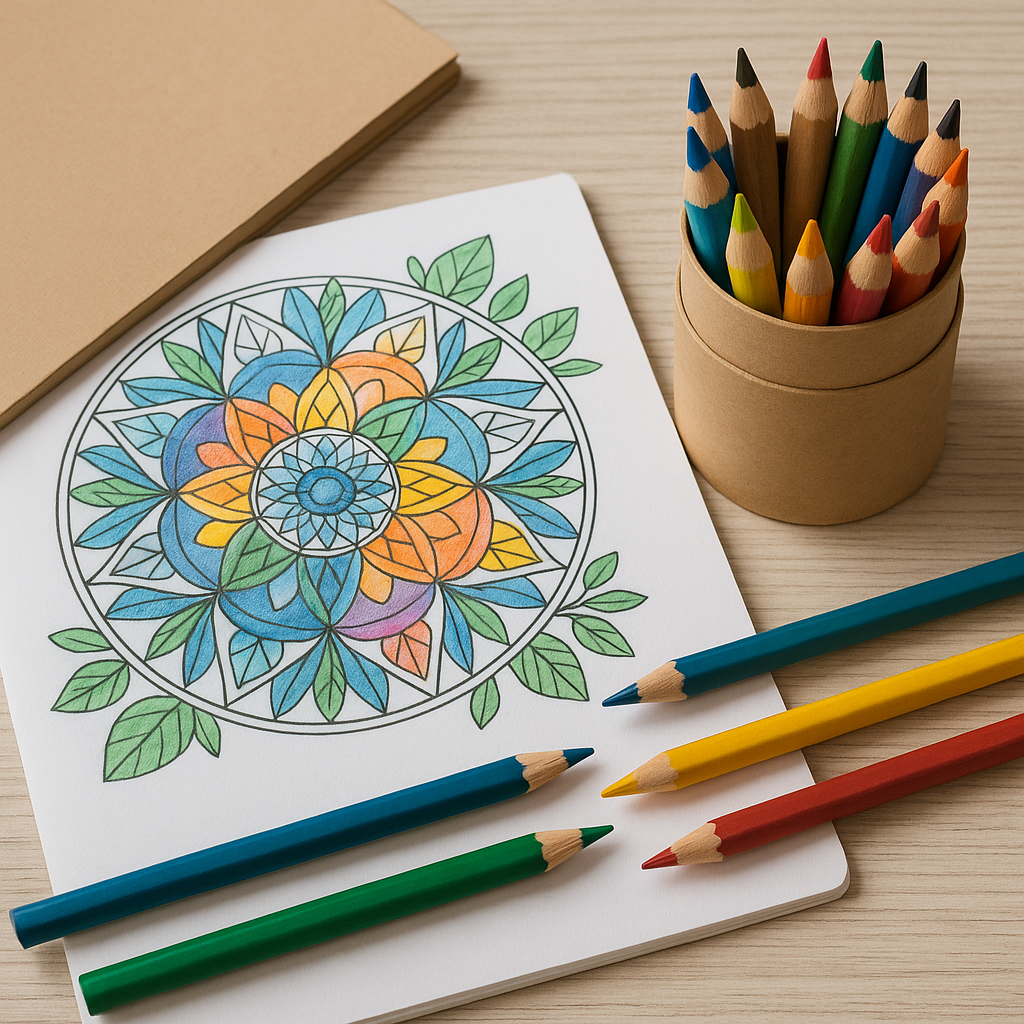
Coloring is commonly associated with childhood, but recent research shows that this simple activity is far more beneficial than it looks. For teenagers and adults, coloring can function as a calming, brain-shifting tool- one that reduces stress, sharpens focus, and gives the mind something we rarely allow it: a structured moment of rest. Even the Cleveland Clinic notes that coloring has become a popular method for lowering stress levels in both teens and adults.
When we color, the brain begins to behave in ways that mirror meditation. The prefrontal cortex, the part of the brain responsible for decision-making and concentration, becomes engaged. At the same time, the amygdala, which triggers fear and stress, becomes less active. This shift lowers cortisol levels and activates the parasympathetic nervous system, the part of the body designed for rest, recovery, and calm. According to Psychology Today, this calming response is one reason coloring can help people who feel overwhelmed or anxious.
Part of coloring’s appeal is its blend of freedom and structure. The page provides boundaries, shapes, and patterns, but the colors are entirely our choice. This balance lets us be creative without feeling pressure. The repetitive motions soothe the mind, while choosing colors gives a small sense of reward and control. Harvard Health explains that simple, repetitive activities like coloring can help quiet racing thoughts by bringing the brain into a more focused and present state.
This is why coloring feels good on a psychological level, too. It offers an escape from overstimulation, giving the brain something simple and rhythmic to focus on. It can help people who struggle with attention or anxiety because it gives the mind one steady task to return to. Finishing a page provides a small but meaningful sense of accomplishment that boosts mood without the pressure of larger responsibilities.
In a world that constantly demands productivity, coloring is a rare invitation to slow down. It is a scientifically proven way to quiet the mind, reduce stress, and experience creativity in its most forgiving form. What looks like a child’s pastime is, in fact, one of the simplest tools we have for restoring our balance.