















I woke before the alarm. The digital clock beside my bed glowed: 5:00 a.m.
Today was the day.
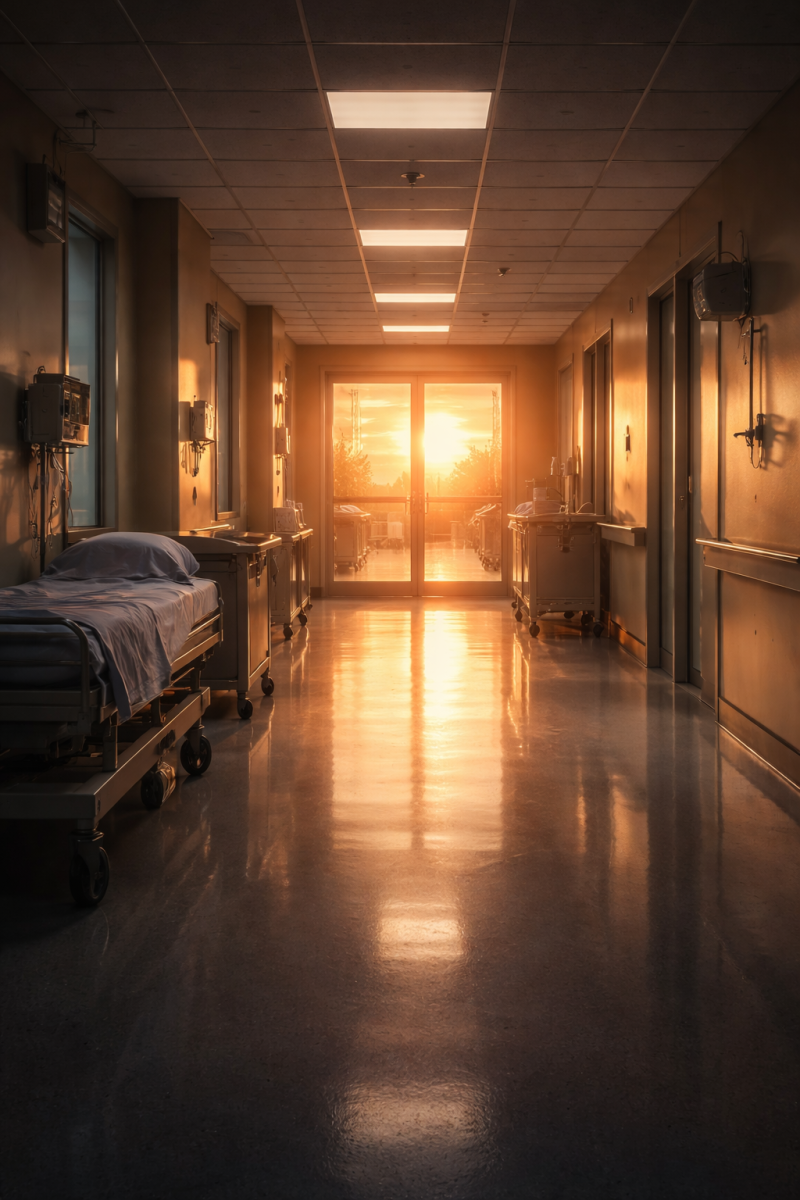
On the drive to the hospital, the sky was slowly burning into shades of orange and violet. The sunrise stretched across the horizon like a quiet farewell. I tried to convince myself it was just another morning, but the thought slipped in anyway: This could be the last sunrise I ever see.
The roads were empty at that hour. No traffic, no noise, just the hum of the engine and the steady rhythm of my own anxious breathing. I found myself noticing every small detail outside the window: the silhouettes of bare trees, the frost along the sidewalks, the faint glow of streetlights fading into daylight.
I didn’t realize I was crying until I wiped my cheek.
When I arrived, the hospital parking lot was already crowded. Inside, the building felt overwhelmingly alive. Phones ringing, carts rolling down hallways, voices echoing across the lobby. Everything moved so quickly while I felt completely frozen in place.
I reminded myself why I was here.
Then I forced a smile and started walking.
I had visited this hospital countless times before, so the path to my grandmother’s room was almost instinctive. Still, I chose the longer route, as if delaying the inevitable by a few extra minutes.
Past the reception desk.
Up the ramp.
Through the emergency wing.
Past the NICU.
Finally, the intensive care unit.
I paused outside the door and took a long breath before pushing it open.
There she was.
Small against the hospital bed, wrapped in blankets and surrounded by quiet machines.
“Good morning, Grandma,” I said, forcing cheerfulness into my voice.
She turned toward me slowly, her expression soft despite the exhaustion in her eyes.
“Good morning, sweetheart,” she said. “Are you nervous?”
“A little,” I admitted.
She smiled faintly. “You’re very brave, you know.”
We both turned toward the man standing across the room.
Dr. Victor Harlow.
He had been my grandmother’s doctor for years. Calm, confident, endlessly reassuring. The kind of doctor who could make even the most terrifying news sound manageable.
He clapped his hands together lightly.
“Well,” he said with a warm smile, “shall we get started?”
His voice had always carried a strange kind of comfort. Even now, as my stomach twisted with fear, hearing him speak made the situation feel almost… ordinary.
Almost.
We were led down a hallway I had never seen before and into the operating wing. The air smelled sharply of antiseptic. Nurses moved quickly around us, preparing equipment, checking charts, adjusting machines.
They helped us change into surgical gowns.
Dr. Harlow explained the procedure again; carefully, calmly, like he had done a hundred times before.
The last thing I remember before the anesthesia took effect was the bright white glare of the operating lights above me.
He had said it would only take a few seconds.
But time became strange after that.
My eyes were closed, my body completely numb, but somehow I could still hear everything happening around me.
Metal instruments clinking.
Soft voices exchanging instructions.
“Scalpel.”
Even though I felt nothing, the sound alone made my heart pound.
The surgery seemed to stretch on forever—four hours, maybe five. It was impossible to tell.
Eventually the voices quieted, and I was moved to the recovery room.
The silence there was almost peaceful.
For the first time since morning, I felt calm.
Then the door opened.
Footsteps entered the room, followed by the sharp buzz of a phone vibrating.
Someone answered it.
At first, I barely paid attention…until I recognized the voice.
Dr. Harlow.
But something about it had changed.
The warmth was gone. His voice was lower now, colder, edged with irritation.
“What do you want?” he muttered.
There was a pause as the person on the other end spoke.
Then he said something that made my blood run cold.
I’m not repeating myself,” he said quietly into the phone.
A pause followed as the voice on the other end responded.
“The chart says cardiac arrest during surgery. That’s the official cause.”
Silence filled the room for a moment.
“No,” he continued, irritation creeping into his voice. “The anesthetic dosage was adjusted exactly the way we agreed. By the time anyone realized something was wrong, it was already too late.”
My chest tightened as I listened.
“You said the recipient was critical,” he added impatiently. “The organs had to remain viable. That was the entire point of doing it this way.”
Another pause.
His voice dropped, colder now.
“And unless you want someone reviewing every detail of that operating room, you’ll make sure the rest of the paperwork stays exactly the way it is.”
The call ended.
A few seconds later, the door shut.
And the room fell silent again.
The word recipient echoed in my mind.
I suddenly understood what he meant.
The boy hadn’t died from a surgical complication.
I lay there frozen, my mind racing.
Had I imagined it?
Was it the anesthesia?
Or had I just heard my grandmother’s trusted doctor confess to murder?
The moment I could move again, I told my grandmother everything.
The next time a nurse came in.
It felt impossible to say the words out loud.
“I know this sounds crazy,” I began, my voice shaking, “but I overheard something during surgery. I could still hear everything, and… I think Dr. Harlow confessed to killing someone on the phone.” I said slurring my words and speaking nervously.
The nurse stared at me in stunned silence.
For nearly a minute, she didn’t speak.
Finally she sighed.
“That’s a very serious accusation,” she said quietly. “Honey, have some rest, I can assure you Dr. Harlow is a great doctor, the anesthetic can have side effects of disillusion.
My stomach dropped. She doesn’t believe me.
“But,” she added carefully, lowering her voice, “I will keep an eye on him. If I notice anything suspicious, I promise I’ll tell you.”
I knew she was lying, she was treating me like a lying child.
For the next four days, I lay awake in that hospital bed, unable to sleep.
Somewhere out there was a dead person.
Someone with parents.
With friends.
With people who were probably still searching for answers.
And I might be the only person who knew the truth.
The moment I left that hospital, I made myself a promise.
I was going straight to the police.
Because if Dr. Victor Harlow really was a murderer…
someone had to stop him.